facebook
 Twitter
 카카오스토리
 네이버밴드
네이버밴드 URL Copy
| 작성자 : 라키스 | 작성일 : 2026-03-26 13:46:43 | 조회수 : 863 |
| 국가 : 아르헨티나 | 언어 : 영어 | 자료 : 사회 |
| 출처 : BBC | ||
| 발행일 : 2026.03.26 | ||
| 원문링크 : https://bbc.com/news/articles/cvg06q36052o | ||
| 원문요약 : 1. 유엔총회에서 노예무역을 중대반 반인륜적 범죄로 인정하는데 투표하였다. 2. 가나에서 제안된 해당 사안은 참석하지않은 52개의 국가를 제외하고 다수 국가의 찬성표를 얻었으며, 미국, 이스라엘, 아르헨티나는 반대표를 던졌다. 3. Samuel Okudzeto Ablakwa 외무부 장관은 앞선 BBC 프로그램에서 "우리는 보상을 원한다. 그리고 확실히 말하건데- 지도자들이 원하는 건 그들의 위한 돈이 아니다.'" 라고 발언하였다. |
||
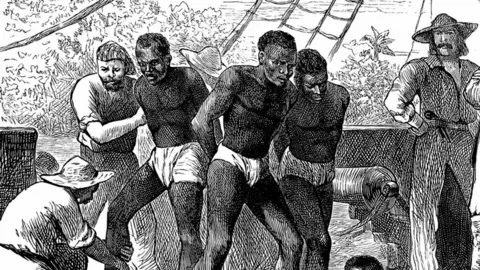 Universal Images Group via Getty Images Universal Images Group via Getty ImagesThe resolution - proposed by Ghana - called for this designation, while also urging UN member states to consider apologising for the slave trade and contributing to a reparations fund. It does not mention a specific amount of money. The proposal was adopted with 123 votes in favour and three against - the United States, Israel and Argentina. Fifty-two countries abstained, including the United Kingdom and European Union member states. Countries like the UK have long rejected calls to pay reparations, saying today's institutions cannot be held responsible for past wrongs. Unlike UN Security Council resolutions, those from the General Assembly are not legally binding, though they carry the weight of global opinion. "Let it be recorded that when history beckoned, we did what was right for the memory of the millions who suffered the indignity of the slave trade and those who continue to suffer racial discrimination," Ghana's President John Mahama told the assembly ahead of the vote. ''The adoption of this resolution serves as a safeguard against forgetting. It also challenges the enduring scars of slavery,'' he said. Earlier, his foreign minister, Samuel Okudzeto Ablakwa, told the BBC's Newsday programme: "We are demanding compensation - and let us be clear, African leaders are not asking for money for themselves. "We want justice for the victims and causes to be supported, educational and endowment funds, skills training funds." The campaign for reparations has gained significant momentum in recent years - "reparatory justice" was the African Union's official theme for 2025 and Commonwealth leaders have jointly called for dialogue on the matter. Ablakwa also said that, with the resolution, Ghana was not ranking its pain above anyone else's, but simply documenting a historical fact. Between 1500 and 1800, around 12-15 million people were captured in Africa and taken to the Americas where they were forced to work as slaves. It is estimated that over two million people died on the journey. The resolution, backed by the African Union and the Caribbean Community, states that the consequences of slavery persist in the form of racial inequalities and underdevelopment "affecting Africans and people of African descent in all parts of the world". Ablakwa told the BBC: "Many generations continue to suffer the exclusion, the racism because of the transatlantic slave trade which has left millions separated from the continent and impoverished." Ahead of the vote, speaker after speaker expressed similar views. The UK, one of the major powers involved in the transatlantic slave trade, said it recognised the untold harm and misery that had been caused to millions of people over many decades. But its ambassador to the UN, James Kariuki, told the assembly in his speech that the resolution was problematic in terms of its wording and international law. "No single set of atrocities should be regarded as more or less significant than another," he said.
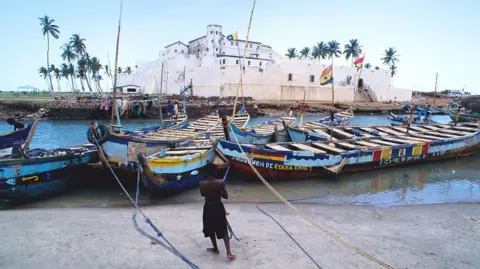 The US's ambassador to the UN made similar points during his speech, saying his country "does not recognise a legal right to reparations for historical wrongs that were not illegal under international law at the time they occurred". In addition, Dan Negrea said the US objected to the "cynical usage of historical wrongs as a leverage point to reallocate modern resources to people and nations who are distantly related to the historical victims". Ghana, one of the main gateways for the transatlantic slave trade, has long been a leading advocate for reparations. Forts, where tens of thousands of enslaved Africans were once held under inhuman conditions, remain standing along the West African country's coast. As well as the "legal problems" around reparations, the US ambassador said the resolution was unclear as "to whom the recipients of 'reparatory justice' would be". Negrea also responded to Mahama's earlier criticism of Donald Trump's administration for "normalising the erasure of black history". Since returning to power, the US president has targeted American cultural and historical institutions for promoting what he calls "anti-American ideology". Trump's orders have led to moves such as the restoration of Confederate statues and an attempt to dismantle a slavery exhibit in Philadelphia. "These policies are becoming a template for other governments as well as some private institutions," Mahama had said on Tuesday. But Negrea said President Trump had done "more for black Americans than any other president". "He is working around the clock to deliver for them and make our country greater than ever," he said. The resolution also calls for cultural artefacts stolen during the colonial era to be returned to their countries of origin. "We want a return of all those looted artefacts, which represent our heritage, our culture and our spiritual significance," Ablakwa said. "All those artefacts looted for many centuries into the colonial era ought to be returned." |
||
| 이전글 | Death toll from Colombian military plane crash rises to 69 as search ends |
|---|---|
| 다음글 | 코스타리카, 美서 추방된 이민자 수용키로…매주 25명씩 |